The Financial Influence of E-Waste Recycling: Employment, Innovation, and Sustainability
E-waste recycling offers a multifaceted economic opportunity, driving job creation and fostering technological advancement. As worldwide demand for e-waste management continues to expand, communities stand to benefit from increased employment and innovative solutions. Furthermore, this sector plays a pivotal role in promoting environmental sustainability. However, the complexities of effective e-waste recycling raise important questions about policy support and community involvement. What methods can be employed to improve these efforts and achieve greater results?
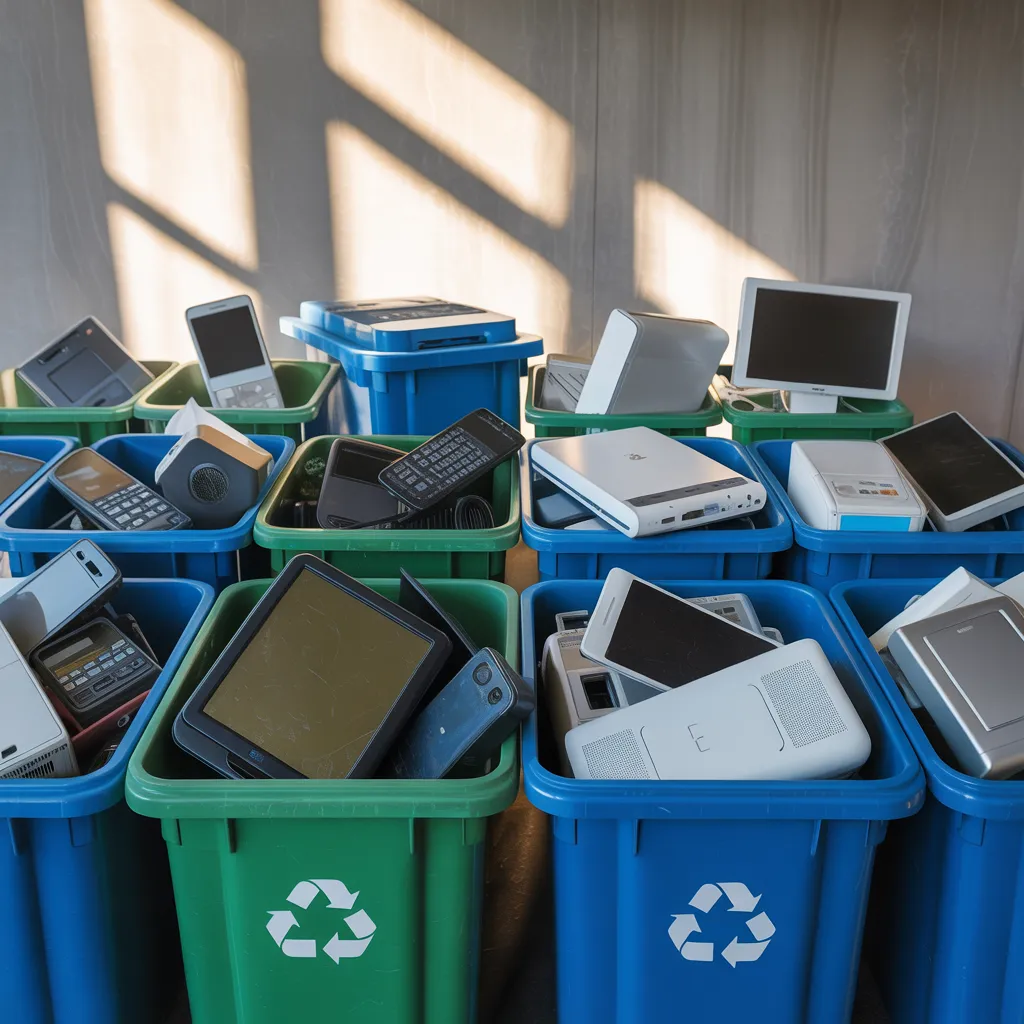
The Rising Problem of E-Waste: Understanding the Crisis
As technology rapidly advances, the issue of e-waste, also known as electronic waste, has grown into a major global crisis. Vast quantities of discarded electronics, such as smartphones, computers, and appliances, are created each year, contributing to environmental degradation. Many consumers are unaware of the hazardous materials present in these electronics, including cadmium, lead, and mercury, which can contaminate soil and water sources, creating significant health hazards.
The improper disposal of e-waste often leads to unregulated recycling methods, where unsupervised laborers dismantle devices without proper safety precautions. This not only worsens the health hazards but also undermines effective recycling efforts. Globally, only a fraction of e-waste is recycled appropriately, revealing a significant deficiency in awareness and infrastructure. Resolving this challenge necessitates a collaborative effort from governments, industries, and consumers to advance responsible disposal practices and strengthen recycling infrastructure, securing a more environmentally sound future.
Economic Benefits: How E-Waste Recycling Creates Jobs
Electronic waste recycling plays a significant role in job creation, with statistics showing a rise in employment opportunities in this sector. It also encourages workforce advancement, equipping workers with valuable expertise in technology and environmental management. Moreover, the expansion of recycling centers can boost local economies, driving investment and supporting community development.
Job Growth Figures
The processing of e-waste is capable of creating countless job opportunities throughout different fields. A study conducted by the Global e-Sustainability Initiative suggests that for every job in e-waste recycling, a minimum of 1.17 more jobs are generated in supporting sectors, including logistics and manufacturing. Moreover, the U.S. Environmental Protection Agency anticipates that expanding recycling initiatives has the potential to produce around 1.17 million new jobs by 2030. These positions range from acquiring and treating to renovating and redistributing refurbished electronics. Additionally, local economies benefit as these jobs often pay above minimum wage and provide opportunities for community engagement. Ultimately, the e-waste recycling field acts as a powerful engine for employment growth, promoting sustainable practices while addressing environmental concerns.
Career Development Opportunities
Investing in e-waste recycling not only addresses environmental challenges but also cultivates significant skill development prospects. The field demands a wide range of skills, from hands-on proficiency in breaking down electronic devices to familiarity with environmental regulations. Training programs can provide workers with fundamental skills, improving their career prospects in a rapidly expanding industry. Additionally, collaborations with learning centers can facilitate experiential learning, connecting the space between academic knowledge and practical application. As workers develop expertise in areas such as electronic restoration, digital data restoration, and dangerous materials processing, they support a more green economy. Ultimately, these professional development efforts uplift participants while advancing the overall growth and progress within the e-waste recycling sector.
Local Economic Growth
Processing e-waste not only enhances skill development but also stimulates regional economic expansion by creating numerous job opportunities. The e-waste processing industry demands a varied labor pool, from technicians to logistics personnel, thus creating jobs at multiple skill levels. Local businesses benefit from increased demand for services related to e-waste collection, processing, and resale of refurbished materials. This growth encourages new business development, as innovative enterprises develop to address the increasing requirements of the field. Moreover, the financial boost produces increased tax revenues for city administrations, enabling reinvestment in community services. As the field develops, it promotes advancements in recycling methods, further enhancing local economic resilience and sustainability. In summary, electronic waste recycling acts as a powerful driver of broad regional economic development.
Cutting-Edge Technologies Transforming E-Waste Recycling
Advanced innovations are transforming the e-waste recycling sector Visit here through advanced separation techniques and automation. These developments boost performance and reliability in recovering valuable materials from discarded electronics. The integration of robotics further streamlines processes, decreasing staffing costs and sustainability concerns.
Expert Separation Techniques
Reshaping the e-waste recycling industry, innovative separation technologies harness groundbreaking technologies to effectively recover valuable materials from discarded electronics. Techniques such as hydrometallurgy, pyrometallurgy, and sophisticated mechanical methods enable recyclers to extract metals like gold, silver, and copper with remarkable exactness. In addition, the use of sensor-enabled separation systems allows for the swift recognition of various materials, boosting the accuracy of separation. These technologies not only decrease material waste but also greatly reduce the environmental impact associated with traditional recycling methods. By optimizing the recovery of valuable materials, advanced separation techniques support a circular economy, fostering sustainability and resource conservation. Ultimately, these advancements strengthen the economic viability of e-waste recycling, creating job opportunities while nurturing innovation in the sector.
Robotics Integration and Automation
Integrating robotic systems and automation into e-waste processing transforms the effectiveness and efficiency of resource recovery. Automated systems can rapidly sort and identify diverse materials, significantly minimizing manual work and limiting operational errors. Sophisticated robotics powered by intelligent algorithms elevate the exactness of breaking down complex electronics, enabling greater recovery rates of precious components such as precious metals and circuit boards. This technological integration not only speeds up the recycling process but also decreases operational costs, rendering e-waste recycling more financially sustainable. Additionally, automation facilitates safer working environments by limiting exposure to dangerous materials. As these innovations progress, they are poised to drive progress in recycling approaches, contributing to a highly sustainable framework to e-waste management and resource recovery.
How E-Waste Recycling Supports Sustainability
As electronic waste continues to accumulate globally, the necessity of recycling becomes clear as an essential solution for fostering environmental responsibility. Recycling electronic waste reduces environmental damage by preventing toxic substances from reaching landfills, thereby reducing soil and water contamination. By recovering precious metals and parts, recycling aids in preserving natural resources, minimizing the demand for new material extraction. This process not only lowers energy consumption but also reduces greenhouse gas emissions linked to the production of new goods.
In addition, e-waste recycling fosters a resource-efficient economy, facilitating the repurposing of resources and maximizing the longevity of electronic equipment. This change serves to minimize the negative impacts of fast-paced technological advancement and consumerism. As businesses and communities embrace e-waste recycling, they help build a more eco-friendly future, enhancing overall ecological health while promoting responsible consumption practices. Consequently, e-waste recycling proves to be a fundamental pillar in the quest for environmental responsibility in an increasingly digital world.
How Regulations Can Help E-Waste Recycling Efforts
The effectiveness of e-waste recycling programs depends significantly on the establishment of comprehensive policies. Governments serve a critical function in developing regulatory guidelines that support the responsible management and recycling of electronic devices. Measures like extended producer responsibility (EPR) can motivate manufacturers to develop products with end-of-life recyclability as a priority, thereby reducing e-waste generation. Additionally, financial subsidies for recycling programs can lower barriers for consumers and businesses, fostering increased engagement in recycling programs.
In addition, public awareness campaigns backed by legislative measures can inform the public about the ecological and economic advantages of e-waste management and recycling. Developing explicit regulations for e-waste collection and processing can enhance efficiency and secure that harmful materials are treated with care. By building a comprehensive policy landscape that prioritizes electronic waste recycling, governing bodies can drive employment opportunities, foster innovation in e-waste recycling solutions, and support long-term economic development.
Community Initiatives That Boost E-Waste Recycling's Economic Influence
Community efforts markedly enhance the economic impact of e-waste recycling by encouraging local engagement and consciousness. Programs such as neighborhood gathering drives and informational seminars not only motivate residents to recycle but also create a sense of collective accountability. Local organizations often partner with recycling firms, enhancing convenience and convenience for local households.
In addition, these locally organized endeavors can stimulate jobs, from collection and sorting to handling electronic waste. By advancing environmentally responsible approaches, neighborhoods can strengthen regional economic growth while reducing environmental threats linked to improper disposal.
Furthermore, outreach efforts can foster innovation by educating communities about emerging recycling technologies, empowering local entrepreneurs to discover new business opportunities within the electronic waste recycling field. In the end, community engagement creates a collaborative force, amplifying the financial advantages of e-waste recycling and supporting a more environmentally responsible future.
Frequently Asked Questions
Which Personal Items Are Considered E-Waste for Recycling?
Common personal electronics that are considered e-waste for recycling consist of used smartphones, laptops, tablets, television sets, printers, and numerous other electronic appliances. In addition, batteries and charging devices are classified as e-waste and ought to be recycled in an environmentally responsible manner.
What Steps Can Individuals Take to Properly Get Rid of Their E-Waste
People can responsibly handle e-waste by locating designated recycling centers, participating in community collection events, or taking advantage of producer recycling schemes. Performing thorough data erasure prior to disposal is critical for safeguarding personal information.
Do Health Risks Exist When It Comes to E-Waste?
Absolutely, e-waste poses substantial health risks. Coming into contact with dangerous chemicals, such as lead, mercury, and other toxins, can cause severe health issues, including respiratory problems, damage to the nervous system, and a higher risk of cancer, particularly for employees working in unsafe disposal conditions.
What Are the Environmental Impacts of Improper E-Waste Disposal?
Inadequate e-waste disposal results in soil and water contamination, threatening ecosystems. Harmful substances, such as heavy metals, infiltrate the environment, posing risks to wildlife and human health while contributing to broader ecological degradation.
How Can Businesses Participate in E-Waste Recycling Initiatives?
Businesses can participate in e-waste recycling initiatives by working alongside certified waste management professionals, implementing take-back programs, informing team members and consumers, and investing in sustainable technologies that promote responsible disposal and resource recovery from electronic waste.